
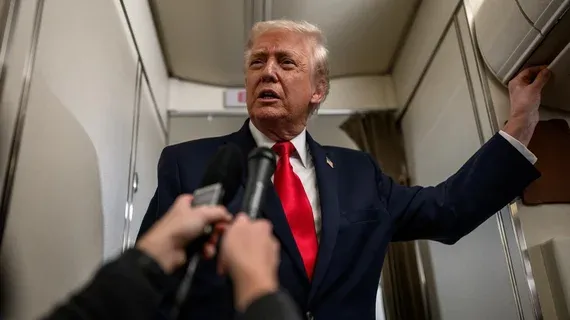
The White House executive order and new HHS strategy shift US policy towards unified AI standards and expanded adoption in healthcare.
Key Details
- 1President Trump signed an executive order aiming to preempt strict state-level AI regulations and promote a cohesive national framework.
- 2The order establishes an AI litigation task force to challenge state laws deemed unconstitutional or counter to federal regulations.
- 3The Department of Health and Human Services (HHS) released a new AI strategy that prioritizes partnerships with private-sector innovators for faster, outcome-focused AI deployment in healthcare.
- 4The HHS plan targets better coordination of AI efforts, moving away from fragmented pilot projects to enterprise-wide initiatives.
- 5Discussion highlights the importance of human oversight in AI-driven healthcare decisions; references to imaging AI advancements such as AI-powered FFR-CT software improving cost and accuracy.
Why It Matters
Unified federal guidance and HHS's active push for AI in healthcare will directly impact the development, adoption, and oversight of imaging AI solutions in radiology. National policy clarity may reduce fragmentation, speed clinical innovation, and demand robust safeguards for patient safety.

Source
HealthExec
Related News

•Radiology Business
Real-World Study: Radiology AI Best in Emergency and Inpatient Settings
A commercial AI tool for intracranial aneurysm detection outperformed in inpatient and emergency settings but yielded limited benefits for outpatients in a major health system study.

•Radiology Business
Healthcare Leader Warns AI Will Dominate Diagnostic Radiology
A leading oncologist urges future radiologists to specialize in interventional procedures due to AI advances in image interpretation.

•Radiology Business
Harrison.ai Restructures and Launches U.S. AI-Enabled Teleradiology Venture
Harrison.ai lays off staff amid major restructuring and launches Frontier Radiology, an AI-powered U.S. teleradiology business.