

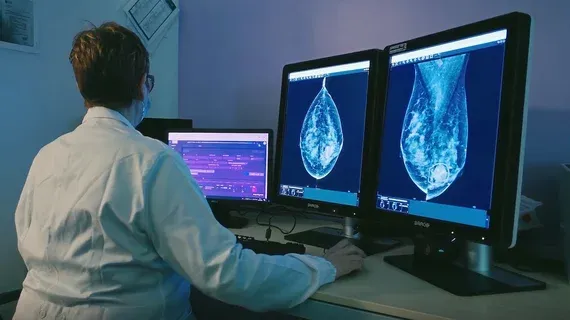
Most radiologists report few meaningful clinical benefits from current breast imaging AI tools, despite rising adoption.
Key Details
- 1Survey of Society of Breast Imaging members evaluated FDA-cleared breast cancer AI detection tool adoption and impact.
- 2Few radiologists believe current AI contributes significant clinical benefits or decisively improves outcomes.
- 3Although daily use is rising, most users report only minor improvements and little to no financial gain.
- 4A related EuroAIM/EuSoMII 2024 survey found nearly half of respondents use AI, but most saw minimal workload reduction.
- 5Anticipated benefits, like improved outcomes or efficiency, are not widely realized so far in clinical practice.
Why It Matters
This suggests a gap between the promise of AI in breast imaging and its real-world impact, informing future research, tool development, and adoption strategies. Understanding these limitations can guide expectations and investment in imaging AI.

Source
Radiology Business
Related News

•Radiology Business
Multi-Vendor AI Adoption Delivers Efficiency Gains in Private Radiology
A large-scale European study shows that adopting multiple AI tools in private radiology practices leads to significant efficiency improvements.
•Radiology Business
Sweden Deploys AI as Standalone Second Reader for Mammography
Three Stockholm hospitals will adopt AI to fully replace radiologist second reads in breast cancer screening.

•AuntMinnie
AI Model Predicts Immunotherapy-Induced Pneumonitis From CT Scans
MD Anderson researchers developed the CIPHER AI model to predict pneumonitis in lung cancer patients using baseline CT scans, outperforming existing models.