

Stanford research shows agentic LLMs can safely draft hospital discharge summaries, reducing physician burnout with minimal risk of patient harm.
Key Details
- 1Stanford study assessed AI-generated hospital discharge summaries over a 10-week period in 2025.
- 2Physicians incorporated AI content in 57% of 384 discharge events; 219 AI summaries were accepted.
- 3Physician reviews indicate 98% saw low or extremely low likelihood of harm from AI-generated notes.
- 488% of unedited summaries rated as having 'no harm potential'; only one summary considered likely to cause moderate harm.
- 5Major issues noted: omissions (25 cases) and inaccuracies (20), with hallucinations flagged only twice (2%).
- 6Physician burnout scores dropped from 1.75 to 1.20 (scale 0–4) after LLM implementation.
Why It Matters
This study provides evidence supporting the integration of LLMs into clinical practice with manageable safety risks, especially given the significant improvement in physician wellbeing outcomes. Findings highlight cognitive offloading as a potentially greater benefit than raw efficiency, with implications for AI rollout in radiology and related documentation-heavy fields.

Source
HealthExec
Related News
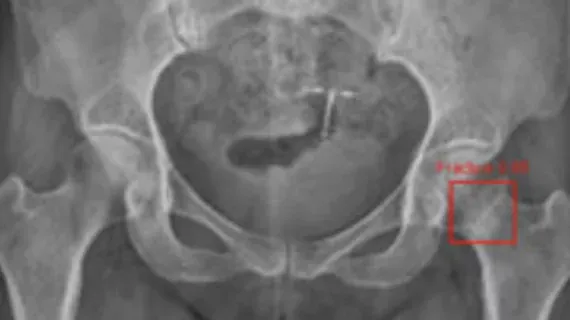
•Radiology Business
AI Model Surpasses Radiologists in Detecting Subtle Hip Fractures
A new AI model outperformed radiologists in identifying difficult-to-detect femoral neck fractures on radiographs.
•AuntMinnie
AI-Driven Whole-Body MRI Biomarkers Aid Myeloma Risk Stratification
AI-powered MRI analysis offers automated risk stratification via body composition in multiple myeloma patients.

•Radiology Business
AI Targets Radiology Residents’ Training Gaps for Personalized Learning
Artificial intelligence can identify gaps in radiology residents' clinical exposure, supporting tailored educational interventions.