
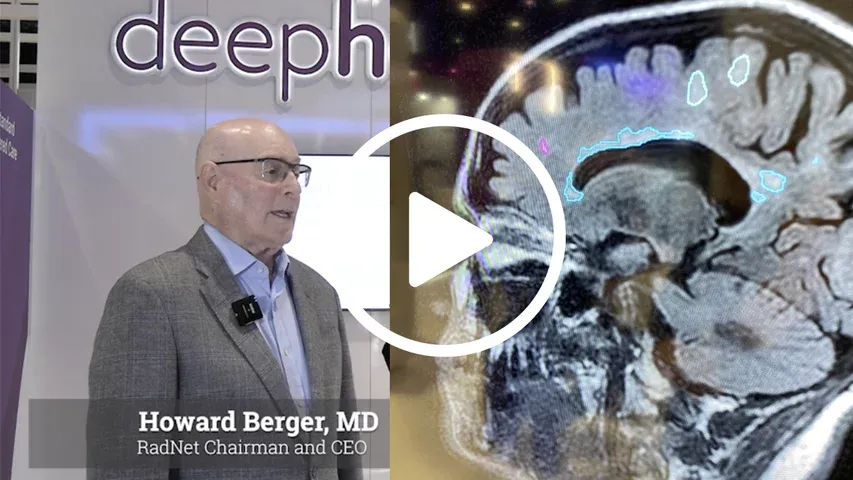
RadNet is heavily investing in DeepHealth to develop a comprehensive AI-driven radiology workflow platform.
Key Details
- 1RadNet has invested tens of millions of dollars into its AI subsidiary, DeepHealth.
- 2The company aims to build a unified workflow, integrating AI modules into a seamless platform.
- 3RadNet's strategy differs from the current fragmented radiology AI approach, which relies on stand-alone algorithms.
- 4Chairman and CEO Howard Berger highlighted the importance of managing patient journeys before, during, and after imaging visits.
- 5RadNet showcased this vision prominently at the 2025 RSNA meeting.
Why It Matters
RadNet's commitment to an integrated AI strategy could set a precedent for large-scale adoption and operational transformation in radiology practices. Unified AI-driven workflows may lead to more efficient, scalable, and patient-centered care models, influencing future industry standards.

Source
Radiology Business
Related News

•Radiology Business
Prime Healthcare Rapidly Rebuilds Radiology Services After Vendor Exit
Prime Healthcare rebuilt integrated radiology operations in under two weeks after its group disbanded, consolidating PACS, RIS, and RCM systems.

•AuntMinnie
AI Quantitative MRI and Amyloid PET Used for ARIA Monitoring in Alzheimer's
AI-driven MRI analysis complements Amyloid PET in detecting ARIA during Alzheimer's treatment.

•Radiology Business
RadNet AI Tool Reduces Unnecessary Prostate Biopsies by 19%
RadNet's DeepHealth AI tool can help avoid nearly 1 in 5 prostate biopsies while maintaining high cancer detection sensitivity.