
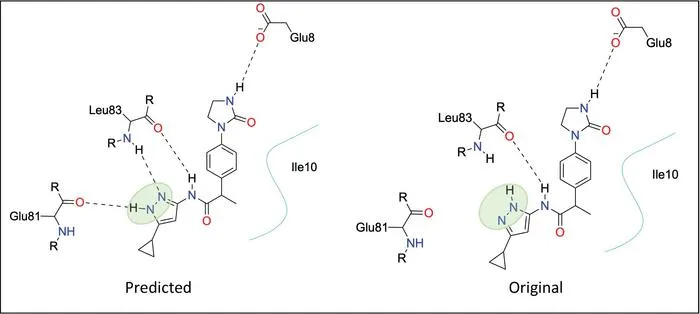
NYU scientists have created an AI tool using crystallographic data to accurately predict stable tautomers in drug-like molecules.
Key Details
- 1A graph neural network model was trained on over 1.1 million tautomeric states from the Cambridge Structural Database.
- 2The AI predicts hydrogen atom positions to resolve tautomers, addressing a challenge unmet by X-ray crystallography or quantum mechanics.
- 3The model corrected about 2.5% of tautomer assignments in a Protein Data Bank ligand dataset, improving chemical accuracy.
- 4The open-source tool (Tautomer-Predictor) analyzes ~4.6 million compounds in 3.2 hours on a single GPU node.
- 5Accurate tautomer prediction influences ligand-protein interaction studies and downstream drug discovery workflows.
Why It Matters
Reliable tautomer assignment is crucial for modeling ligand-protein interactions in drug discovery, which is closely linked to molecular imaging and radiopharmaceutical development. Advances in AI-based molecular modeling can inform radiology researchers working on precision diagnostics and new tracer design.

Source
EurekAlert
Related News
•EurekAlert
Binghamton Researchers Secure AI Funding for Cancer Imaging Technologies
Binghamton University researchers earned SUNY funds to develop AI-powered cancer diagnostics using standard pathology imaging.

•EurekAlert
AI Enhancement Boosts Handheld Ultrasound for Carotid Plaque Detection
AI-powered post-processing improves handheld ultrasound detection of small or faint carotid plaques in community screening.
•EurekAlert
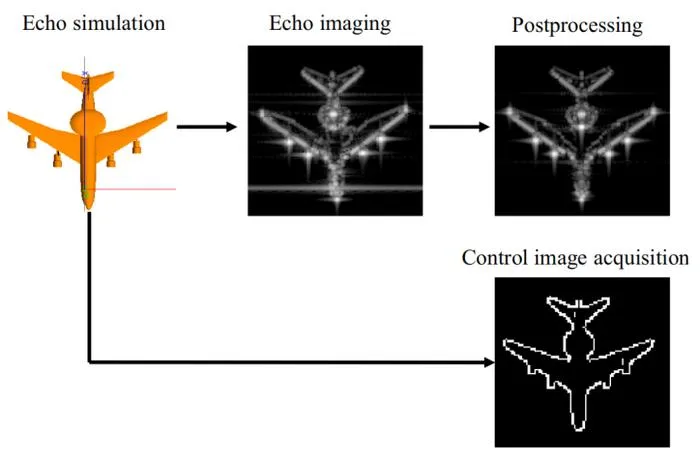
AI Achieves Precision in Generating Radar Images at Specific Attitudes
Researchers introduce a ControlNet-based AI method for precise, attitude-controllable radar image generation of noncooperative targets.