

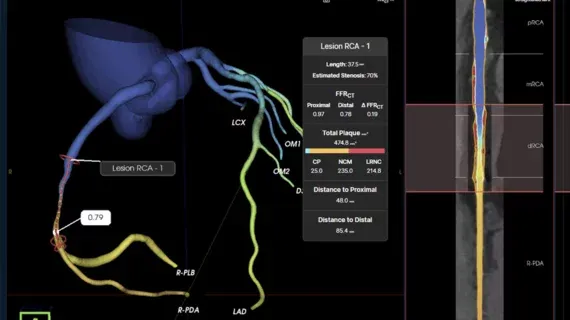
Heartflow's AI Plaque Analysis software leads to significant improvements in cholesterol management and cardiac risk reduction in coronary artery disease patients.
Key Details
- 1DECIDE Registry, the largest prospective study of its kind, enrolled ~20,000 CAD patients at 30+ US clinical sites.
- 2Heartflow AI Plaque Analysis prompted treatment changes in over 50% of patients versus CCTA alone.
- 3Patients managed using the software saw mean LDL cholesterol reductions of 18.7 mg/dL.
- 4A 15% estimated reduction in cardiac event risk was observed for these patients.
- 5Significant management changes occurred even in patients with no calcified plaque.
- 6The AI provides individualized risk insights by quantifying and characterizing all plaque types, including non-calcified, soft plaques.
Why It Matters
This large-scale prospective evidence demonstrates that adding AI-based plaque quantification to CCTA can materially change patient management, with potential to reduce adverse cardiac events. These results highlight the growing role of imaging AI in personalizing cardiovascular care.

Source
Cardiovascular Business
Related News

•AuntMinnie
AI Triage Tool Speeds Up ICH Head CT Turnaround in ED
AI-based triage for intracranial hemorrhage on head CT reduced emergency department report turnaround by 13 minutes.
•Cardiovascular Business
FDA Clears Elucid's AI-Driven FFR-CT Solution for Cardiac Imaging
Elucid's FFR-IQ, an AI-powered noninvasive FFR-CT tool, receives FDA clearance for clinical use.

•Radiology Business
FDA Approves SimBioSys AI Tool for Breast Cancer Risk via MRI
SimBioSys received FDA clearance for TumorSight Risk, an AI tool assessing breast cancer recurrence risk using MRI.