

A thought-leader identifies five crucial capabilities required for AI to succeed in healthcare, including radiology.
Key Details
- 1Explainable AI will be crucial to build trust among clinicians and patients.
- 2Causal inference is expected to make AI recommendations more robust and reliable.
- 3Federated learning will allow AI to learn from diverse datasets without compromising patient privacy.
- 4Integration of multimodal data—including imaging, genomics, and clinical notes—will be necessary for comprehensive insights.
- 5Continuous learning will enable AI systems to adapt to new data and evolving clinical practices.
Why It Matters
Radiology is at the forefront of healthcare AI deployment, and these attributes—especially explainability, multimodal data fusion, and federated approaches—are increasingly vital for clinical acceptance and regulatory approval. Staying ahead of these trends will ensure radiology professionals and AI developers remain competitive and compliant.

Source
AI in Healthcare
Related News
•Radiology Business
Real-World Study: Radiology AI Best in Emergency and Inpatient Settings
A commercial AI tool for intracranial aneurysm detection outperformed in inpatient and emergency settings but yielded limited benefits for outpatients in a major health system study.

•Radiology Business
New Rubric Enhances Safety of AI-Generated Radiology Summaries
Researchers developed a five-factor rubric to assess the safety and quality of AI-generated, patient-friendly radiology report summaries.
•Radiology Business
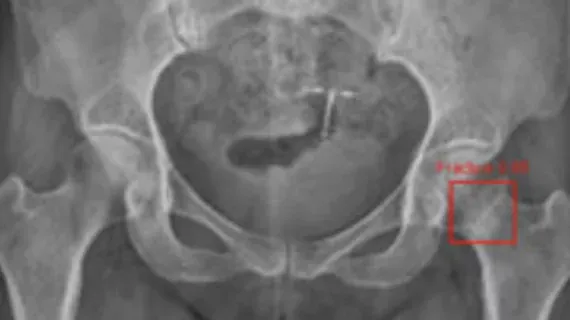
AI Model Surpasses Radiologists in Detecting Subtle Hip Fractures
A new AI model outperformed radiologists in identifying difficult-to-detect femoral neck fractures on radiographs.