
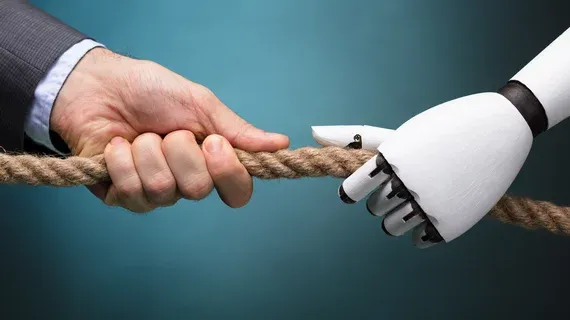
Topol and Rajpurkar propose three models for dividing diagnostic tasks between AI and radiologists to improve workflow outcomes.
Key Details
- 1Eric J. Topol, MD, and Pranav Rajpurkar, PhD, outlined their ideas in a commentary in RSNA's Radiology.
- 2They challenge the traditional 'assistive approach,' citing evidence that integrated workflows don't always enhance results.
- 3Three division-of-labor models are described: AI-first, physician-first, and case allocation based on complexity.
- 4Role separation is promoted to leverage the unique strengths of both AI and radiologists and reduce automation errors.
- 5The authors note that hybrid and adaptive approaches will likely emerge in clinical practice, based on context.
Why It Matters
These recommendations highlight the evolving strategies for effectively integrating AI into radiology practice. Clarifying roles can help maximize clinical benefits and reduce risks such as automation bias or neglect.

Source
Radiology Business
Related News

•AuntMinnie
AI-Powered Quantitative MRI Aids Diffuse Glioma Management
Deep learning with quantitative MRI enables noninvasive treatment planning and molecular profiling of adult diffuse gliomas.
•AuntMinnie
Majority of Radiologists Use AI Daily but Have Mixed Views on Benefits
Survey shows 64% of radiologists use AI daily, but only a minority feel it significantly enhances skills.
•AuntMinnie
AI Boosts Sensitivity but Raises False Alarms in Microbleed Detection
AI significantly increases sensitivity for detecting cerebral microbleeds on brain MRI but at the cost of more false positives, highlighting the complementary strengths of AI and radiologists.