
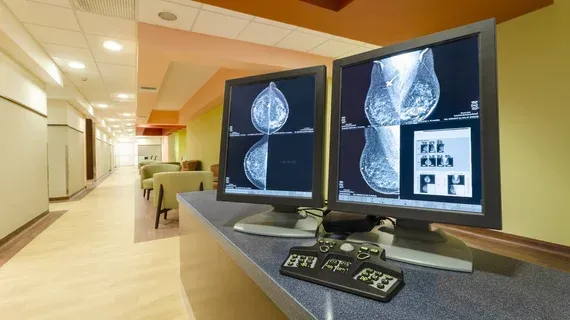
AI misses 14% of invasive breast cancers on mammography, with luminal cancers and dense tissue posing significant challenges.
Key Details
- 1Study analyzed 1,097 breast cancers from 1,082 women using Lunit Insight MMG AI between 2014–2020.
- 2AI missed 154 cancers (14%), often in younger women with smaller (<2 cm), lower-grade tumors and dense breasts.
- 3Missed cancers were more likely luminal subtype (false-negative rate 17.2%), compared to HER2-enriched (9%) and triple-negative (14.5%).
- 4Major reasons for AI misses included dense breast tissue (n=56), nonmammary zone location (n=22), architectural distortion (n=12), and amorphous calcifications (n=5).
- 561.7% of AI-missed cancers were deemed 'actionable' on further review by radiologists.
Why It Matters
Understanding which cancer features are often overlooked by AI tools enables radiologists to better interpret AI results, reducing missed diagnoses. These insights highlight the continued importance of human expertise in mammography, especially for high-risk groups like women with dense breast tissue.

Source
AuntMinnie
Related News
•Radiology Business
UK Launches Largest-Ever Breast Imaging AI Trial
The UK NHS will trial AI as a replacement for second radiologist reads in breast cancer screening with $13M support, enrolling up to 700,000 women.

•AuntMinnie
Deep Learning PET Biomarkers Outperform Clinical Tools in Prostate Cancer Survival Prediction
Deep learning-derived PET biomarkers more accurately predict metastatic prostate cancer survival than standard clinical risk models.
•AuntMinnie
Multinational AI Model Flags Osteoporosis on Chest X-rays
AI can opportunistically detect osteoporosis from chest x-rays across diverse international populations.