
An FDA-cleared AI tool for breast ultrasound may reduce unnecessary biopsies of benign breast lesions by about 60%.
Key Details
- 1Research presented at RSNA 2025 evaluated the Koios DS AI tool for breast ultrasound.
- 2The study involved 14 breast imaging radiologists and 271 lesions in 253 women, with 76.8% benign and 23.2% malignant lesions.
- 3The AI tool showed 60.6% specificity, assigning many benign lesions to lower BI-RADS categories, and a sensitivity of 90.5%.
- 4The tool misclassified 6 malignant lesions, most of which had other imaging correlates.
- 5Experts emphasized the AI should be used as an adjunct, not a replacement, to radiologist judgment for biopsy decisions.
Why It Matters
Reducing unnecessary biopsies can lower patient anxiety, cut healthcare costs, and ease operational burdens on imaging practices. Integrating AI as a decision-support tool alongside radiologists could lead to more accurate, efficient, and patient-centered breast imaging workflows.

Source
AuntMinnie
Related News

•AuntMinnie
In-House LLM Accurately Flags Critical Pediatric Radiology Findings
A locally deployed LLM system at Stanford Health achieved 99.7% sensitivity for detecting critical results in pediatric radiology reports, supporting workflow automation.
•Cardiovascular Business
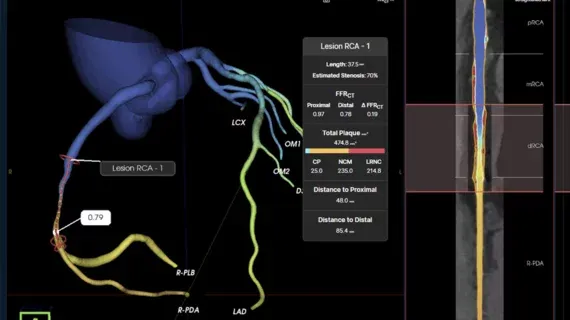
FDA Clears Elucid's AI-Driven FFR-CT Solution for Cardiac Imaging
Elucid's FFR-IQ, an AI-powered noninvasive FFR-CT tool, receives FDA clearance for clinical use.
•AuntMinnie
LLMs Rarely Recommend Unnecessary Imaging, Except for Thyroid Ultrasound
Large language models seldom over-recommend imaging, but thyroid ultrasound guidance shows substantial discrepancies.