
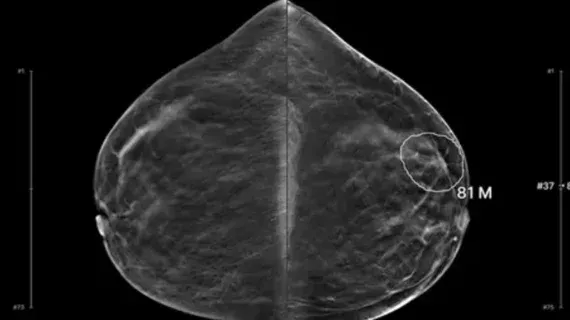
A commercial AI system can identify up to 33% of interval breast cancers missed by radiologists on digital breast tomosynthesis exams.
Key Details
- 1Study published in Radiology tested AI on digital breast tomosynthesis (DBT) exams preceding confirmed interval cancer diagnoses.
- 2The AI algorithm (Lunit INSIGHT DBT v1.1) flagged up to one-third of interval cancers missed by radiologists.
- 3Interval breast cancers are often more aggressive and have worse prognoses than screen-detected cancers.
- 4Nearly 12 years of retrospective DBT data (Feb 2011–Jun 2023) were analyzed.
- 5Algorithm scored lesions; those over 10 marked as positive, and radiologist review correlated AI findings with actual cancer sites.
Why It Matters
Interval cancers are frequently aggressive and linked with higher morbidity and mortality due to later detection. AI's ability to identify a significant portion of these previously missed cancers suggests potential for earlier intervention and improved patient outcomes in breast imaging.

Source
Health Imaging
Related News
•Radiology Business
UK Launches Largest-Ever Breast Imaging AI Trial
The UK NHS will trial AI as a replacement for second radiologist reads in breast cancer screening with $13M support, enrolling up to 700,000 women.

•AuntMinnie
Multinational AI Model Flags Osteoporosis on Chest X-rays
AI can opportunistically detect osteoporosis from chest x-rays across diverse international populations.
•AuntMinnie
Deep Learning PET Biomarkers Outperform Clinical Tools in Prostate Cancer Survival Prediction
Deep learning-derived PET biomarkers more accurately predict metastatic prostate cancer survival than standard clinical risk models.