
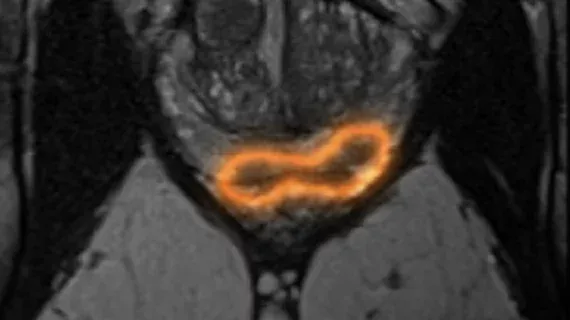
A global study finds AI performs comparably to radiologists in detecting prostate cancer on MRI.
Key Details
- 1The SCARLET-1 study retrospectively evaluated 22,445 prostate MRI scans from 21,252 patients.
- 2Training and internal testing datasets spanned 26 cities in 14 countries.
- 3External validation included data from 20 cities in 12 countries.
- 4The AI algorithm demonstrated performance on par with human radiologists for identifying prostate lesions.
- 5Authors highlight progress in generalizability due to diverse multiethnic data training.
Why It Matters
Demonstrating robust, generalizable AI performance across diverse, real-world datasets is a key milestone for clinical adoption. Such technology could expand global access to prostate cancer diagnostics and support radiology workflows amid workforce shortages.

Source
Radiology Business
Related News

•AuntMinnie
HPI Rebuts AI's Supposed Impact on Radiology Workforce Shortage
Harvey L. Neiman HPI challenges recent claims that AI has lessened the radiology workforce burden, citing evidence of rising workloads and imaging volumes.
•Radiology Business
RadNet AI Tool Reduces Unnecessary Prostate Biopsies by 19%
RadNet's DeepHealth AI tool can help avoid nearly 1 in 5 prostate biopsies while maintaining high cancer detection sensitivity.
•Radiology Business
FDA Clears MRI2CT AI for 3D Bone Visualization from MRI
MRI2CT's NextMR receives FDA clearance to generate 3D bone images from standard spine MRIs, reducing reliance on CT scans.