
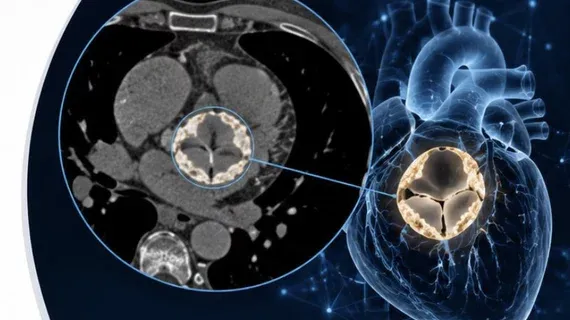
AI algorithms can identify undiagnosed aortic stenosis on routine chest CT scans, potentially improving early detection and patient care.
Key Details
- 1Researchers at Cedars-Sinai tested AI to flag aortic stenosis on 440 routine non-contrast, nongated chest CT scans of adults over 50.
- 2The AI, developed by Nanox, found aortic valve calcium in 178 patients; 84.8% of these findings were not reported in original radiology reports.
- 3Only 1.4% of patients (6/440) met the threshold for severe aortic stenosis, but 22.5% (99/440) had moderately high risk (≥100 Agatston units).
- 4Aortic valve calcium was measured using the Agatston scoring method, the same as in CT coronary calcium scoring.
- 5Earlier detection could redirect patients into appropriate surveillance and intervention pathways, addressing gaps in current care.
Why It Matters
This study highlights AI's potential to serve as an early, opportunistic screening tool for heart disease on scans performed for other reasons, reducing missed diagnoses and improving patient outcomes through prompt intervention.

Source
Cardiovascular Business
Related News

•Radiology Business
Multi-Vendor AI Adoption Delivers Efficiency Gains in Private Radiology
A large-scale European study shows that adopting multiple AI tools in private radiology practices leads to significant efficiency improvements.

•Radiology Business
Harrison.ai Cuts 15% Staff as Revenue and U.S. Expansion Accelerate
Radiology AI firm Harrison.ai reduces staffing by 15% amid quadrupling revenue and major U.S. expansion.

•AuntMinnie
AI Model Predicts Immunotherapy-Induced Pneumonitis From CT Scans
MD Anderson researchers developed the CIPHER AI model to predict pneumonitis in lung cancer patients using baseline CT scans, outperforming existing models.