
AI is increasingly enhancing ultrasound imaging, clinical workflows, and education, though challenges in trust and implementation remain.
Key Details
- 1Dr. Alison Noble of Oxford University gave a keynote at AIUM 2026 on AI's evolving role in ultrasound.
- 2Modern deep learning methods automate ultrasound video interpretation, supporting better clinical decision-making.
- 3AI-assisted portable ultrasound projects in Kenya (TraCer) and India (CALOPUS) improve access and diagnostic accuracy with minimal resources.
- 4A 2025 study reduced MAE in gestational age estimation from 23.5 to 14.3 days when using explainable AI.
- 5Research shows model explanations can boost imaging performance but sometimes decrease user trust.
- 6AI developments include tracking sonographer skills and advancing federated learning and human-AI collaboration, with pilot MRI report work demonstrating improved accuracy.
Why It Matters
Ongoing advances in AI for ultrasound are making real clinical impact in both high- and low-resource settings, supporting imaging professionals and expanding diagnostic access. However, successful integration depends on building trust, improving usability, and focusing on collaborative human-AI workflows.

Source
AuntMinnie
Related News
•Radiology Business
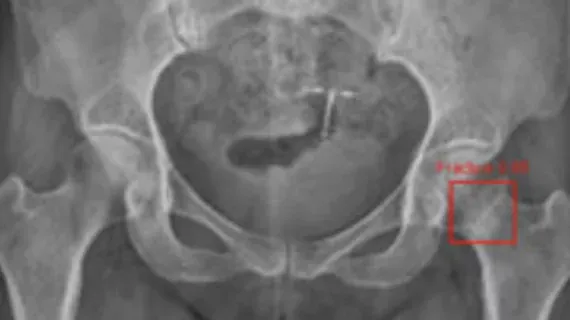
AI Model Surpasses Radiologists in Detecting Subtle Hip Fractures
A new AI model outperformed radiologists in identifying difficult-to-detect femoral neck fractures on radiographs.

•AuntMinnie
AI-Driven Whole-Body MRI Biomarkers Aid Myeloma Risk Stratification
AI-powered MRI analysis offers automated risk stratification via body composition in multiple myeloma patients.
•Radiology Business
AI Targets Radiology Residents’ Training Gaps for Personalized Learning
Artificial intelligence can identify gaps in radiology residents' clinical exposure, supporting tailored educational interventions.