| RadAISlice |
Weekly Updates in Radiology AI |
Good morning, there. LiON identified 51 overlooked liver lesions in 10,333 routine CT patients. I see this as a practical safety net, not a replacement reader, because amended reports and MDT escalations followed. The signal is strongest for high volume CT workflows where missed or delayed cancer diagnosis remains a real risk. Where would you place an AI second read in abdominal CT workflow?
Here's what you need to know about Radiology AI last week: 🩻 Liver CT AI catches missed malignancy signals Outcomes gap for cleared AI devices Fracture AI holds across hospitals MRI quality score predicts detection Plus: 5 newly released datasets, 5 FDA approved devices & 4 new papers.
|
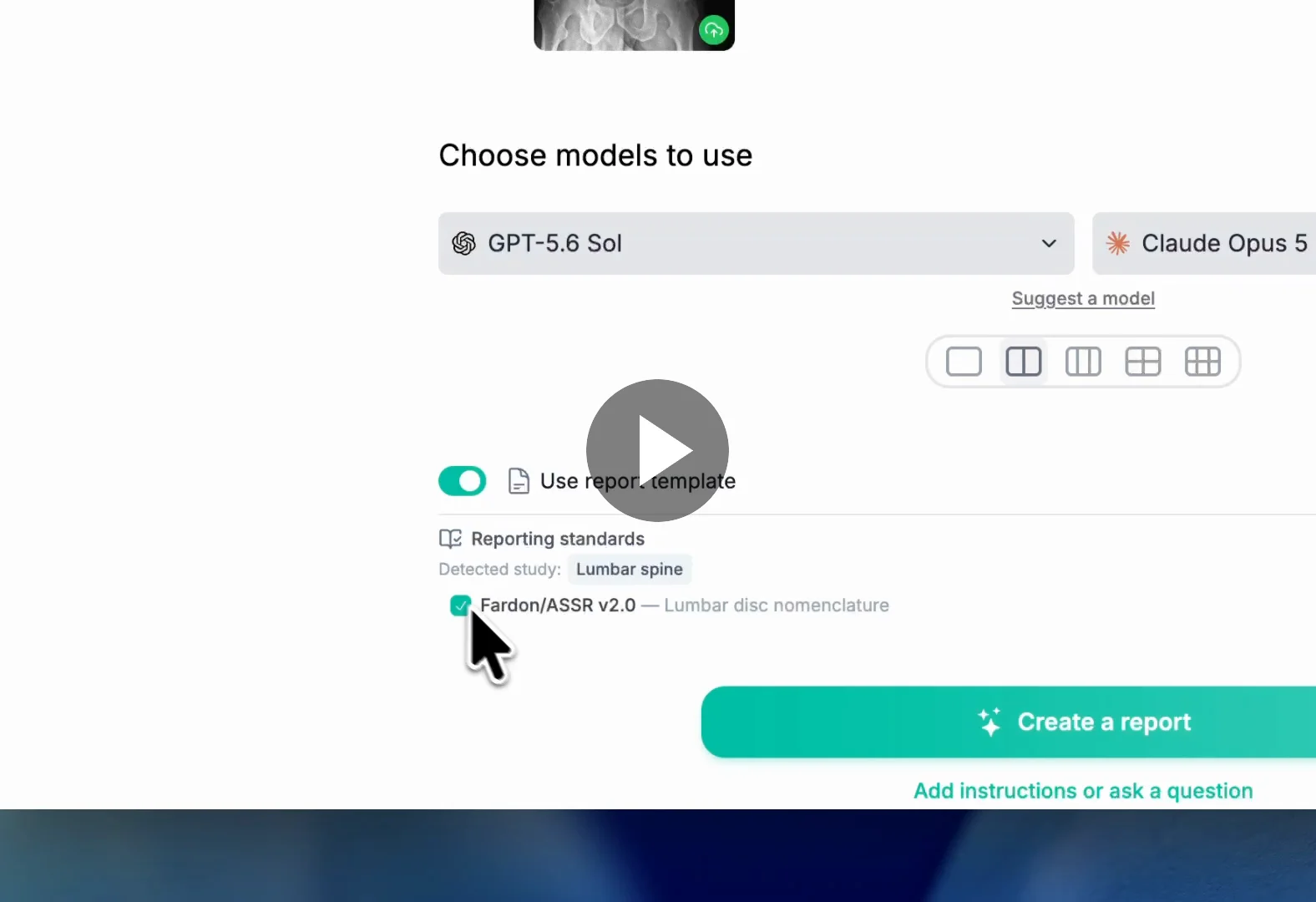
BUILT BY US Use established reporting standards directly in RadAIChat Asked by a hospital or client to follow a specific reporting standard?
Instead of checking guidelines or repeatedly prompting the AI, just switch on the standard in RadAIChat. The first supported standard is Fardon/ASSR nomenclature for lumbar spine imaging.
Need another reporting standard supported? Reply to this email and tell us which one you use.
|
🩻 Liver CT AI catches missed malignancy signals RadAISlice: This study stands out because it moved from large validation into routine clinical CT workflow. The details: Trained on 6,443 patients and validated across 22,251 patients Single arm clinical trial included 10,333 routine contrast CT patients Trial AUC was 0.952 with 95% CI 0.942 to 0.961 AI human review found 51 overlooked lesions and 15 malignancies Triggered 37 amended reports and 22 MDT escalations
Key takeaway: This changes the AI discussion from standalone accuracy to safety net workflow design for missed cancer detection in busy CT services. |
🧪 Outcomes gap for cleared AI devices RadAISlice: This evidence gap feels central to AI purchasing, governance, and local validation decisions. The details: 1,059 FDA cleared radiology AI devices were reviewed Only 3 devices had registered trials on patient outcomes Only 2.5% were linked to prospective trials 0.9% posted results or peer reviewed publications 62% of studies used small homogeneous cohorts
Key takeaway: Clearance still does not equal clinical benefit, so radiology teams need stronger outcome evidence before broad deployment. |
🦴 Fracture AI holds across hospitals RadAISlice: This multicenter reader study is useful because fracture AI is already near frontline adoption. The details: Included 1,500 adults with suspected appendicular fractures Hospital sensitivity ranged from 80% to 86% Specificity ranged from 93% to 96% AI assistance improved reader sensitivity by 11 percentage points Specificity changed by 0.6 percentage points and was not significant
Key takeaway: For ED radiography, the practical value may be fewer missed fractures while preserving specificity under radiologist oversight. |
🎯 MRI quality score predicts detection RadAISlice: This result matters because image quality is often discussed subjectively but deployed operationally. The details: Analyzed 12,496 consecutive prostate multiparametric MRI exams DL model reached AUC 0.99 for low versus high quality images csPCa AI AUC improved from 0.92 to 0.99 across thresholds Radiologist accuracy improved from 77% to 85% Reference standard was biopsy histopathology
Key takeaway: Objective MRI quality scoring could help decide when AI outputs and radiologist reads are most trustworthy. |
GBM-MRI-MGMT (ds007045) (2025) Modality: MRI | Focus: Brain, glioblastoma | Task: Tumor segmentation, MGMT prediction Size: 337 MRI exams from 337 patients. Four sequences per case: T1, T1-CE, T2, FLAIR. Annotations: Expert-validated BraTS tumor masks. MGMT promoter methylation status for all patients. Institutions: IRCCS Istituto delle Scienze Neurologiche di Bologna, Städtisches Klinikum Karlsruhe, et al. Availability: Highlight: Multi-center BIDS dataset with raw and preprocessed MRI, expert-refined masks, and complete MGMT profiling.
|
CT-PEGCT-Diag (2026-08-03) Modality: CT | Focus: Extracranial germ cell tumors; pediatrics | Task: Subtype classification; tumor segmentation Size: 642 non-enhanced CT scans from 642 patients. Includes 6 histological subtypes. Annotations: Expert 3D whole-tumor masks. Tumor category/subtype labels and basic metadata. Institutions: Children’s Hospital, Zhejiang University School of Medicine; National Clinical Research Center for Children and Adolescents’ Health and Diseases, et al. Availability: Highlight: First public non-enhanced CT dataset for pediatric extracranial GCT differential diagnosis with expert tumor masks.
|
AMPLIFAI (2026-08-19) Modality: CT | Focus: Liver, HCC | Task: LI-RADS classification, feature segmentation Size: 590 multiphase abdominal CT studies from 584 patients. Training 531 cases, validation 59 cases. Annotations: LI-RADS categories, lesion size, target lesion masks, and voxel-level masks for APHE, washout, and capsule. Institutions: University of Maryland Institute for Health Computing, University of Maryland School of Medicine, et al. Availability: Public via AMPLIFAI Challenge website and Hugging Face. Link unspecified.
Highlight: First public multiphase CT benchmark with voxel-level major LI-RADS feature annotations.
|
AMPLIFAI (2026-08-14) Modality: CT | Focus: Liver; HCC | Task: LI-RADS classification; lesion/feature segmentation Size: 590 multiphase CT cases from 584 patients. 531 train and 59 validation cases. Annotations: LI-RADS categories, lesion size, and voxel-level masks for lesion, APHE, washout, and enhancing capsule. Institutions: University of Maryland Institute for Health Computing; University of Maryland School of Medicine; et al. Availability: Public; distributed via the AMPLIFAI Challenge Website and Hugging Face. Link unspecified.
Highlight: First public multiphase liver CT dataset with expert voxel-level masks for major LI-RADS imaging features.
|
ScoliGait (unspecified) Modality: Video + X-ray | Focus: Spine; gait | Task: AIS screening; motion analysis Size: 1,516 gait video clips from 758 participants. Paired spinal X-ray records. Annotations: Cobb angle measurements and binary scoliosis labels. Labels validated by senior doctors. Institutions: The University of Hong Kong Availability: Highlight: First dataset pairing smartphone gait videos with spinal X-ray ground truth for AIS screening.
|
🏛️ FDA Clearances K252571 - Mediaire received 510k clearance for mdprostate, an AI MRI tool for prostate image analysis and segmentation. K253902 - 3DIEMME received 510k clearance for RealGUIDE, software for automated CT image processing and planning. K261059 - Overjet received 510k clearance for Multi Image Caries and Charting Assist for dental radiograph analysis. K260567 - Fujifilm received 510k clearance for EW10 EC02, software that supports lesion detection during GI endoscopy. K252853 - Xiamen Inno Medical received 510k clearance for CAD Lower GI EC07 01 for lower GI lesion detection.
|
📄 Fresh Papers doi:10.1016/j.clinimag.2026.110923 - A meta analysis of 597,419 European screening exams found AI raised cancer detection by about 0.9 per 1000. doi:10.3174/ajnr.A9596 - Prospective vessel wall MRI testing showed Sonic DL cut scan time 42% with noninferior lesion assessment. doi:10.2196/94689 - DeepSeek R1 detected 89% of real radiology report errors and achieved 95% correction accuracy in review. doi:10.1016/j.acra.2026.08.014 - A prospective chest radiography reader study found AI shortened reads but did not improve diagnostic accuracy. Browse 289 new radiology AI studies from last week.
|
That's it for today! Before you go we’d love to know what you thought of today's newsletter to help us improve the RadAISlice experience for you. |
|
👋 Quick favor: drag this into your Primary tab so you don’t miss next week. Or just hit Reply with one thought. See you next week.
P.S. We keep building free tools to accelerate your radiology work. What's the most time-consuming pain point in your day that we should help speed up? Reply and share your take so we keep building around you. |
|
|